


Salad Blend
Salad Blend
Vendor
EasytogrowbulbType
Flower Seeds1000 In stock
Sub total
$4.69Couldn't load pickup availability
Estimated deliver 5-9 days
People are viewing this right now


PRODUCT DETAILS
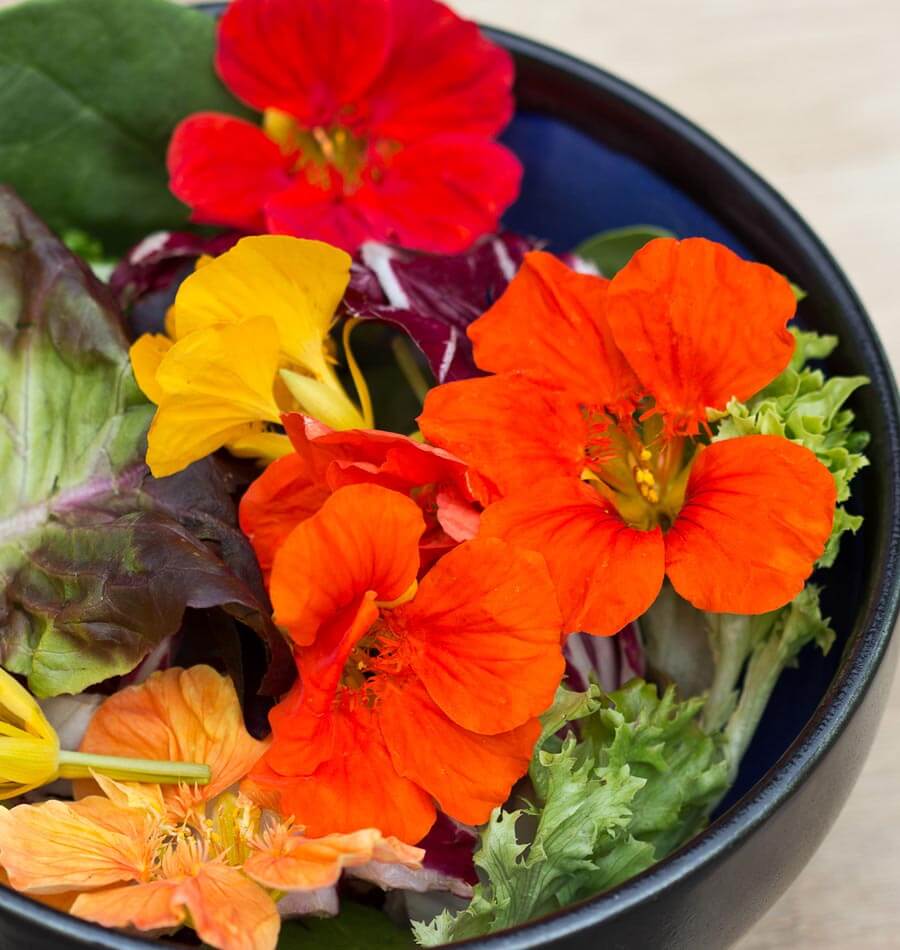
Tropaeolum majus. Salad Blend nasturtium seeds bring brilliant colour to summer salads. Salad Blend nasturtiums feature spurless, half-double flowers in tangerine, soft salmon, deep gold, deep mahogany, bright scarlet, cream and cherry-rose. Pick and wash a handful of these bright summer flowers and just tear them into pieces over a summer salad. The result transforms a simple salad into a work of art. Nasturtiums are very easy to grow, and quite drought tolerant, so they are a fine choice for xeriscaping. In the right environment nasturtiums will self sow and come back year after year.
Annual
-
- Hardy annual
- Spurless, half-double flowers
- Rich colours
- Flowers rise above foliage
- Scatter into salads
How to Grow Nasturtium
Timing
Sow indoors in peat or coir pots 2-4 weeks before the last frost date. Better yet, direct sow from 1 week after last frost and repeat at 2 week intervals into early summer. Optimal soil temperature for germination: 12-18°C (55-65°F). Seeds will sprout in 7-12 days, perhaps longer outdoors.
Starting
Sow seeds 5mm – 1cm (¼”-½”) deep. If starting indoors, provide darkness during germination, followed by bright light. Space smaller varieties 15-30cm (6-12″) apart, and the big ones like Tall Single 60-90cm (24-36″) apart.
Growing
Nasturtiums thrive in poor to average, slightly acidic, well-drained soil. Keep watered during dry weather, and do not fertilize.
TIPS
DISEASES & PESTS
If aphids infest nasturtiums, cut off the infested growing tip and destroy it. Otherwise, a quick jet of water from the hose will dislodge and kill aphids.